It’s important to have an engaging profile as it effects your ranking in our search results and the likelihood that people will click your profile.
Below we discuss 5 tips for creating an engaging profile:
Tip 1 – How to choose the ideal profile photo
Tip 2 – How to set up tags to come across as a specialist
Tip 3 – How to write a “Book Now” bio
Tip 4 – Offering online therapy increases your reach
Tips for an Engaging Profile
Tip 1 – How to choose the ideal profile photo

We notice that people click on profiles more when the therapist's face takes up most of the circle image shown.
Choose a high quality ‘portrait style’ photo - note the composition of the above shot (i.e., the amount of space taken up) and the blurred background. If you don’t already have a professionally taken photo, you may have a portrait mode available in your smartphone's camera app.
Tip 2 – How to set up tags to come across as a specialist
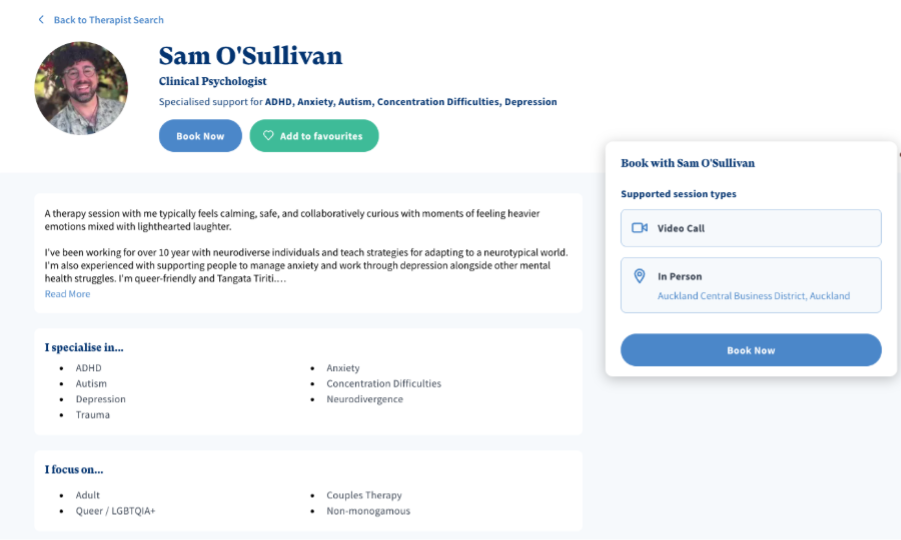
We've found people don’t want to see a list of seemingly disconnected bullet points; they want to get a concise sense of your experience and areas of interest.
1. Specialisations “I specialise in”:
It’s important to choose your specialisations based on what best represents your experience as a therapist.
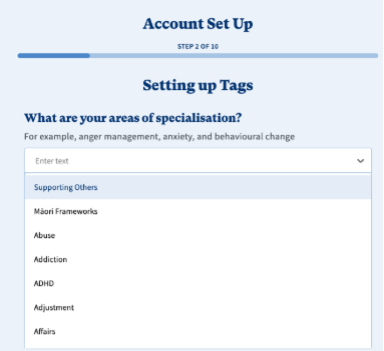
When choosing specialisations, they show as a drop-down list in alphabetical order, or you can search by typing where it says “Enter text”. If there’s an option missing that you want included, please let us know and we’ll include those that are popularly requested. Please note a minimum of 3 to 4 specialisations, and a maximum of 12 is expected here.
2. Client Groups “I focus on”:
These refer to the types of people you are trained to work with: adults, adolescents, couples, etc.
You can also select tags such as Māori and queer / LGBTQIA, which are included here because they are demographics overrepresented in mental health statistics.
3. Modalities:
We have found people who are new to therapy typically don’t use this filter. Modalities are generally more important for clients who have been to therapy before (this is an Advanced Filter).
Please choose all the modalities you’re trained in as it can help the Clearhead team make a recommendation for particular issues.
Our list is not exhaustive, but you can list additional modalities as key words in your bio. Please let us know is there’s an option that’s missing and we’ll include those that are popularly requested.
Tip 3 – How to write a “Book Now” bio
We’ve seen countless users exit out of therapist's profiles when they contain lists of acronyms and dry academic jargon.
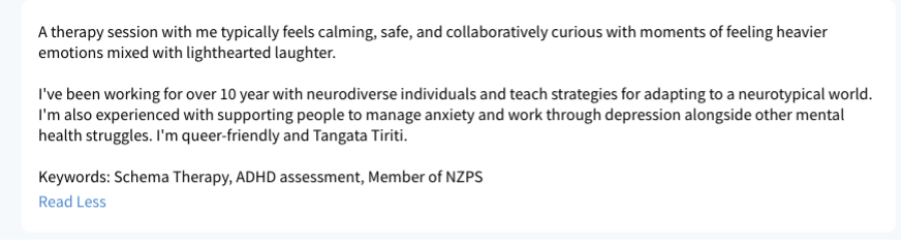
Your bio is important as it’s generally the final piece of information a person will look at to make their decision about clicking Book Now. It's an opportunity to express your unique ‘therapy personality’ and approach to therapy in a relatable way.
Example:
 I
I
It can be helpful to include some additional keywords if you think people will actively search for them. You don’t need to repeat anything you’ve already included in your tags.
Tip 4 – Offering online therapy increases your reach
50% of our bookings are for online sessions over video call. Enabling online therapy gives therapists more reach. However, it best to not offer only online therapy as offering both in person and online optimises your reach.
Most of our therapy clients are based in larger cities. If you live in a small town or city, we always recommend that you enable online therapy. 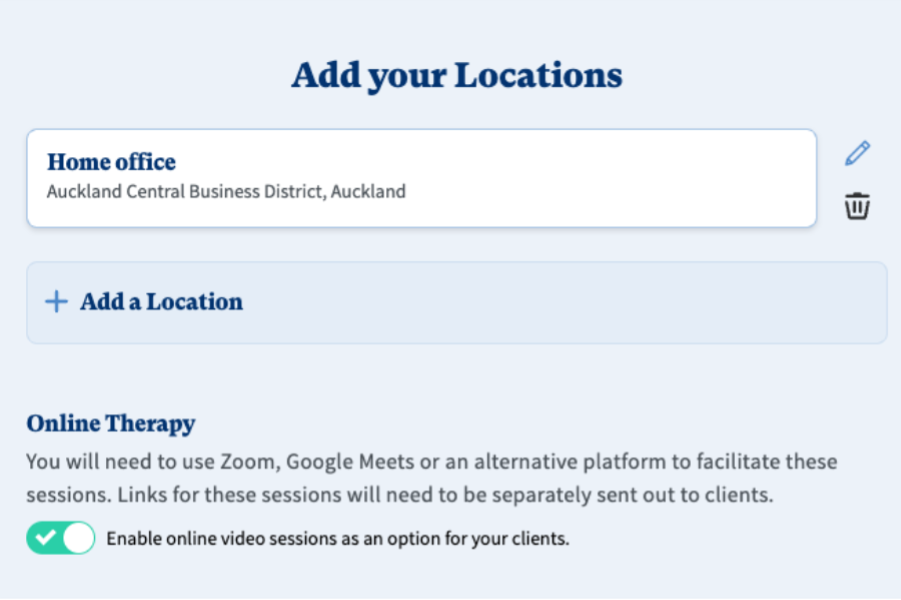
Was this article helpful?
That’s Great!
Thank you for your feedback
Sorry! We couldn't be helpful
Thank you for your feedback
Feedback sent
We appreciate your effort and will try to fix the article